Comet 45P/Honda-Mrkos-Pajdusakova

It wasn’t easy but on Friday the weather cooperated and I was able to capture a glimpse of comet 45P/Honda-Mrkos-Pajdusakova.  That’s if you consider -10°C outside temperature to set-up a telescope and operate a laptop cooperation from Mother Nature.

In my previous post I gave myself a 2-day challenge to capture this comet as it was essentially the last few days at a decent magnitude 7 brightness before becoming non-observable as it swings around the sun over the coming weeks.  And when it returns to the northern latitude sky in mid-to-late February it will be dimer at magnitude 10.  In the image below, I labeled some of the brighter stars with their visual magnitude as reported by the Tycho-2 catalog.
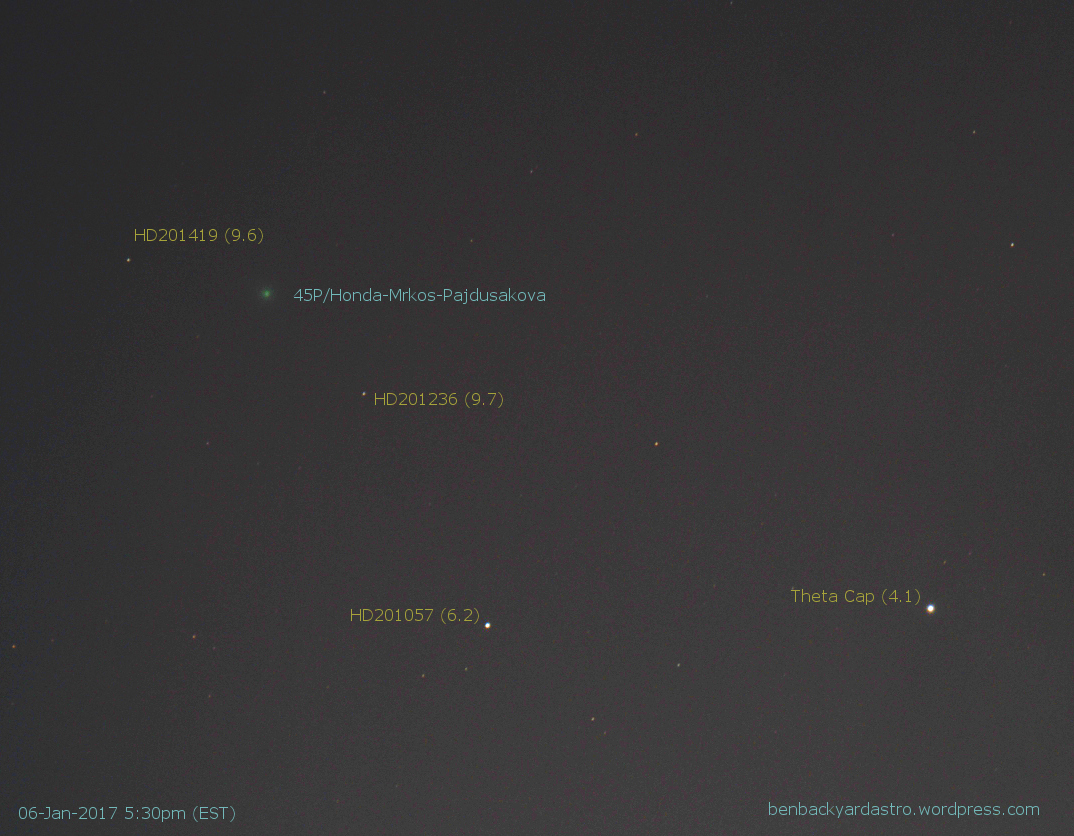
Comet 45P/Honda-Mrkos-Pajdusakova

Comet 45P/Honda-Mrkos-Pajdusakova – around magnitude 7 on January 6th, 2017

I had a very small window of about 30 minutes to make any observation and photograph it.  The challenge started with setting up without polar alignment; the sky was still too bright to locate Polaris,  and instead relied on the position of Venus to align the mount.  As it was still twilight, I was limited to short exposures to keep the histogram on the left half on the camera and to make out a star from the background sky.  I actually started at ISO 400 with only 1 second exposure while adjusting the focus around Theta Cap (magnitude 4).  And as the minutes ticked by I was able to slowly increase my exposure as the twilight darkness permitted.  With neighboring trees, and rooftops coming into view I had to grab as many frames as possible. In the end I got 14 images with 6 seconds exposure at ISO 800 before calling it quits.

With such short exposures no chance of capturing any comet tail, but the green halo is unmistakable comet.

I hope to capture a few more comets this year.

Skywatcher 80ED
Canon XTi (450D)
14 x 6sec (ISO 800)
Registered and stacked with DeepSkyStacker.  Post-processing with GIMP.
The Moon, Mars and Venus

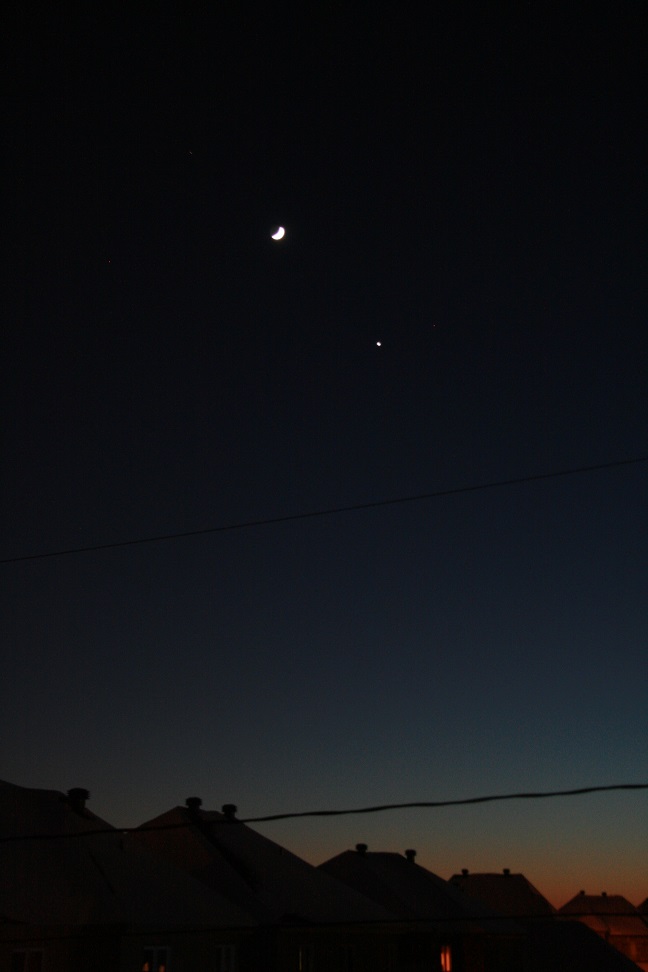
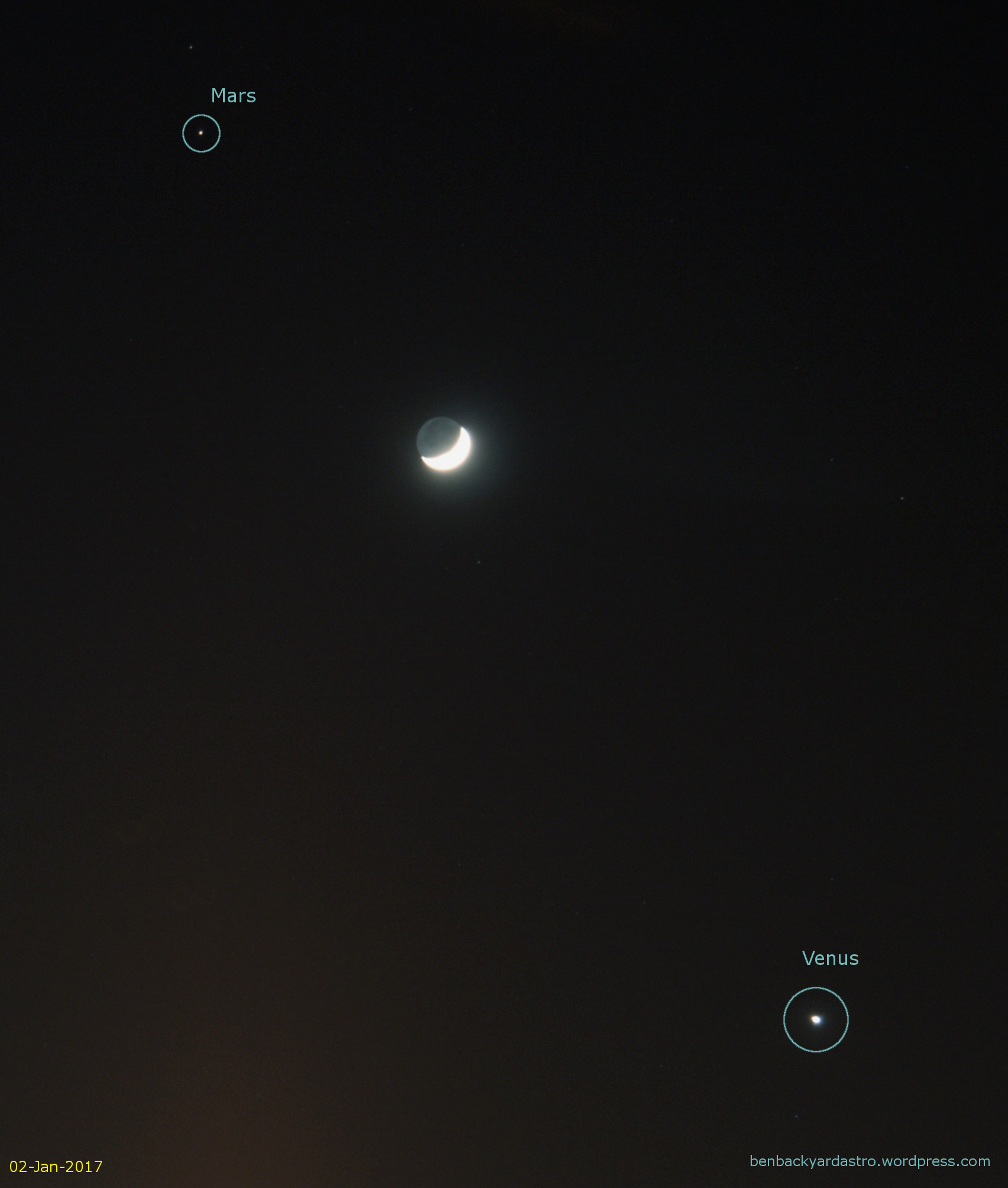
It’s not often that the Moon finds itself between two planets nicely lined up and within a 12 degree field of view.  Just yesterday at around the same time, the Moon was located below Venus.  The image below is a two second exposure at ISO 800 with 53mm lens at f/5.6 on a tripod. I cropped the image to remove a street lamp and light pillars from other light sources further in the distance.

02-Jan-2017: The crescent Moon between Mars and Venus

02-Jan-2017: The crescent Moon between Mars and Venus

The toughest part was actually finding a spot around my block where there was less glare from street lights or annoying power and utility lines in view.  Luckily I found a spot with two extinguished street lamps and setup in between.

A little earlier I quickly snapped the image below from the bedroom window on the 2nd floor.  The sky wasn’t dark yet, and as the camera was hand-held, 1/4sec was the lowest I could go.  Nevertheless with the rooftops in the foreground, it provides for a sense of scale and location in the sky.  The orange-red horizon from the setting sun is a nice touch.

Moon with Venus and Mars in the evening sky

Moon with Venus and Mars in the evening sky


Venus and Crescent Moon

After three days of cloud cover and a good 20cm of snow, it was nice to see a clear and crisp sky throughout the day and into the evening.  With the sun set and the sky still dark blue a crescent Moon and Venus made for a fine pair in the south-west sky for the first evening of 2017.

New Years 2017 Moon and Venus

New Years 2017 Moon and Venus

The Moon will continue to travel towards Mars, located higher up and to the left (East) with a good photo opportunity on the 2nd (tomorrow) with the Moon between both planets.  For the rest of January, Venus will gently move closer to Mars to within 6 degrees at the end of the month.

Photo Details:
Canon XTi (450D)
17mm F4 (1/10sec ISO400)
inset: 85mm F5.6 (1/10sec ISO800)

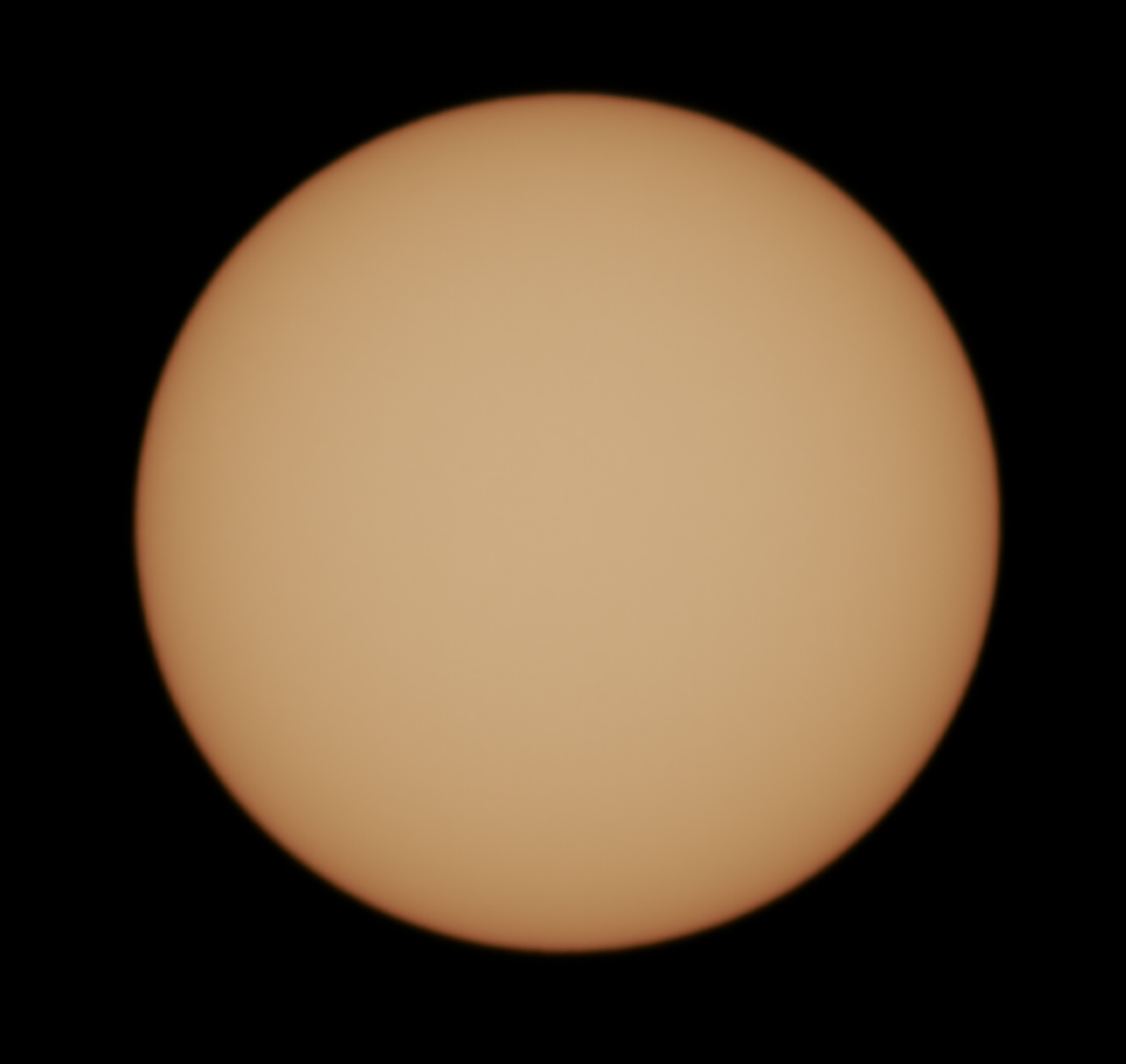
December 25th – No Sunspots

The sun has been without sunspots for two days, but that is expected as we are heading to a minimum in the 11-year cycle.

Cycle 24 Sunspot Number

Cycle 24 Sunspot Number (NASA)

Nevertheless as it was a nice afternoon grabbed the scope and did some observation of the sun.  A little of a challenge to focus when there is no contrasting details to base yourself on.

December 25th 2016 - No Sunspots

December 25th 2016 – No Sunspots

Skywatcher 80ED
Canon XTi (450D) ISO 100 – 1/800sec
Thousand Oaks R-G Solar Film

Link

TIME  magazine has released what their editors consider the best space photos of 2016.

P Crowther, University of Sheffield/NASA/ESA

http://time.com/4510266/best-space-photos-2016
Ref: TIME

November 13, Nearly Full Moon

Image

Making diner and notice that it’s getting dark outside and there’s not a cloud in the sky.  Wait! What time does the Moon rise? 4:54pm it should already be 5 degrees in the sky.  Run to the front of the house and look out the door, but no Moon.  Hmmm… maybe I’m too low and the houses across the street are blocking the view.  Head up one floor and look out the bedroom window!  Ah there it is.  OK kids, who wants to go see the SuperMoon!  I grab my camera as my kids run for their boots and jacket.  I figure that from the street corner I should have a good line of sight.  Once there I ask my son to hold his arms up in the air as if grabbing the moon.  I need to get down pretty low on my knees to get everything lined up.  After a few repeated instructions to open or close his hands, to which he responds with a “Are you done yet!”  I take a few long exposures under the street lamps. No tripod so 1/8sec and ISO 800 it is.  Then took a few more of just the Moon with shorter exposures to avoid causing the Moon to become saturated (1/200sec ISO200)

A bit of photo editing and the end result.

November 13th 2016 Full Moon - just ahead of the Super Moon.

November 13th 2016 Full Moon – just ahead of the Super Moon.

How Many Stars?

Image

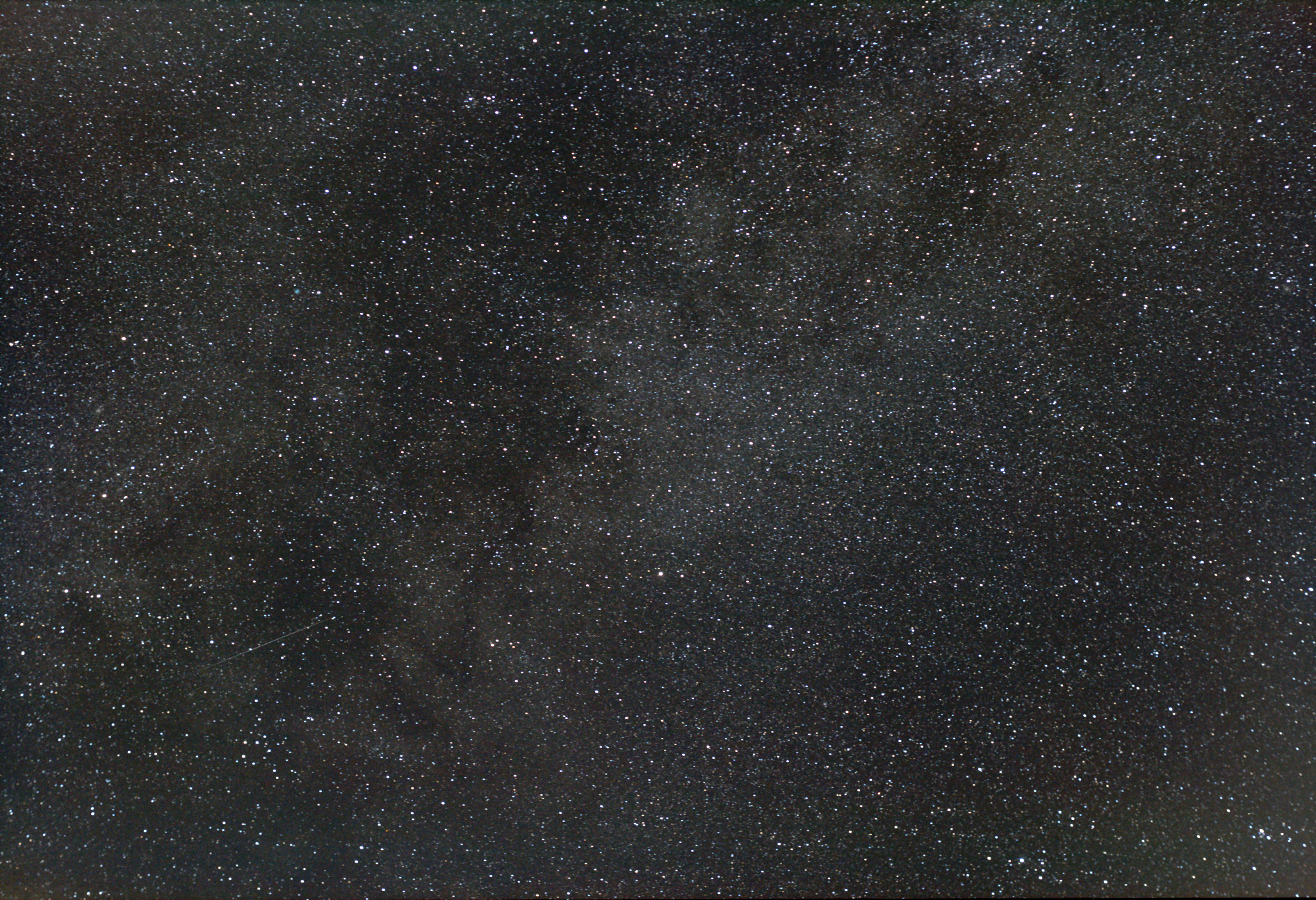
Looking at the sky at night from your backyard you’ll probably be able to see about 50 stars, more if you are away from the city.  So how many do you think is in the frame below?

Portion of the Milky Way near Vulpecula.

Portion of the Milky Way near Vulpecula.

Taking a 200 x 200 pixel sample in the middle I counted 155 stars.  Hence extrapolated to the entire picture comes to 38,000 stars for this 18 x 10 degree portion of the sky.  OK I cheated in taking a picture of a portion of the Milky Way… Nevertheless that is a rather small fraction of the 300 billion stars estimated within our own Milky Way.

Bonus if you can spot the meteor!  Showed up in a single 30sec frame, which I added separately in post processing, else it would have been eliminated from the final image as it’s a random event and I always use a sigma distribution for my stacking.   Hint: it’s located just above open cluster CR399, also known as Brocchi’s Cluster.

Stitching Together the Milky Way

Image

To get a nice view of the Milky Way I would need to get far away from the city lights and a short focal, wide-angle lens.   Also most new DSLR are quite impressive in low light conditions to suppress noise at ISO settings above 1600.  My old Canon XTi (450D) is best kept at 400… but when stacking many frames I can go up to 800 as the noise gets reduced in the process.  Hence when planning of astro-photo session, you need to balance the level of noise and the number of frames you’ll stack.  Also ensure that the light pollution or background brightness level never exceeds 3/4 of your intensity level else you are clipping and loosing information.

The image below is two processed images taken with a 50mm lens on two different days (30 seconds exposure at ISO 800) stitched together the old fashion way: manually in a photo editor.

Milky Way around constellation Vulpecula

Milky Way around constellation Vulpecula – Benoit Guertin

Click on the above image for a a larger version and try to find the planetary nebula Messier 27.  Hint: it’s blue.

Apollo 11 and 17 Landing Sites

Image

What is the smallest detail of the lunar surface can I get with a 80mm telescope (600mm focal length) and Canon 10.1Mpixel camera?  Matching some of the smaller craters in a Moon atlas gives me roughly 6-8km/pixel.  But with image processing anything below 10km doesn’t really show or will blur in the noise.

I tagged a few geological features and dimensioned two craters for reference.  At the same time identified the approximate Apollo 11 and 17 landing sites.  The Apollo Lunar module is only 9.4m wide, hence it is impossible for any Earth bound telescope can possibly pick them up (even Hubble).  However the Lunar Reconnaissance Orbiter (LRO) did manage to pull it off by lowering its orbit as low as 50km above the lunar surface.

Apollo 11 and 17 landing sites and other features

Apollo 11 and 17 landing sites and other features. Moon (October 6th, 2016) – Benoit Guertin

My original photo of the Moon.

Moon – October 6th, 2016

Image

Quick picture of the Moon with the telescope balanced on a railing.  Didn’t trouble getting the mount out.

Moon - October 6th, 2016 - Benoît Guertin

Moon – October 6th, 2016 – Benoît Guertin