Comets for 2017 [updated 16-APR-2017]

Below are some of the comets to keep a watch for in 2017 as they should be observable with small scopes and even binoculars.

45P/Honda-Mrkos-Pajdusakova
Currently observable low in the evening at around magnitude 8 and will continue to brighten to magnitude 7 in January and then fade rapidly, including a approach to within 0.08AU of Earth on February 11th, as well as passing within a few degrees of globular cluster M3 shortly after.
  Photo from January 6th.

C/2016 U1 ( NEOWISE )
Currently observable at magnitude 9 and predicted to brighten to magnitude 7 in mid January.  Discovered on October 21, 2016.  Not visible in the southern hemisphere.

C/2015 V2 ( Johnson )
Faint at magnitude 12, and will continue to brighten until mid 2017, with good chances of observation.

C/2015 ER61 ( PanSTARRS )
Should brighten to magnitude 7 spring of 2017, unfortunately not very visible to the northern latitudes.  However it will cross many NGC and Messier objects throughout the first half of the year.

2P/Encke
Expected to brighten to magnitude 6-7 around at the start of March, overall visible for about 45 days.  For those in the northern hemisphere, best observations will be the end of February.

41P/Tuttle-Giacobini-Kresak
Expected to brighten to better than magnitude 6 in early April.  A good opportunity for wide-field photo as it passes 5° of M92 at the end of April.
Photo from April 13th.

References:
Comet Chasing
Seiichi Yoshida’s Bright Comet Listing (and future listing)
Paper by the British Astronomical Association

December 25th – No Sunspots

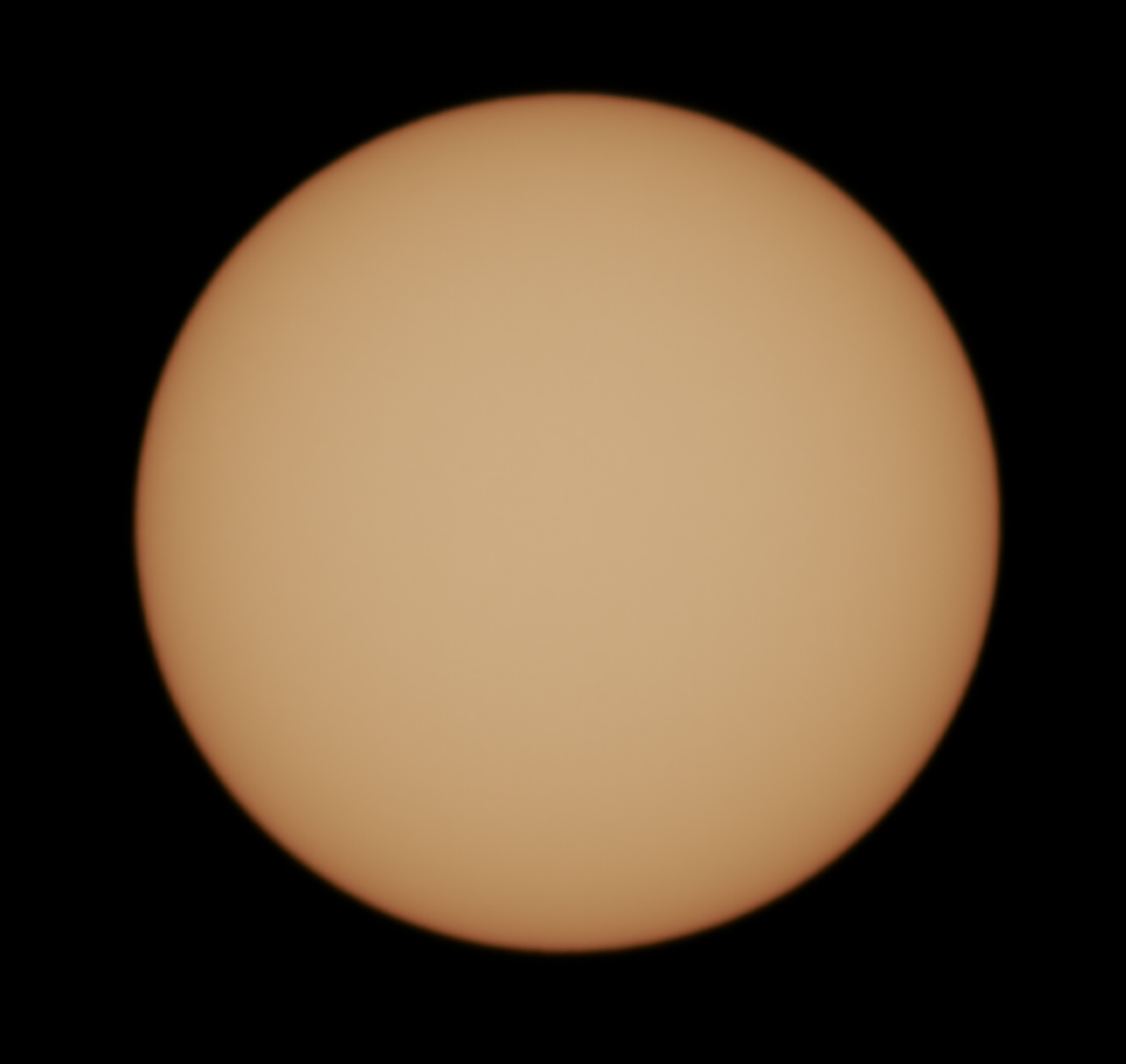
The sun has been without sunspots for two days, but that is expected as we are heading to a minimum in the 11-year cycle.

Cycle 24 Sunspot Number

Cycle 24 Sunspot Number (NASA)

Nevertheless as it was a nice afternoon grabbed the scope and did some observation of the sun.  A little of a challenge to focus when there is no contrasting details to base yourself on.

December 25th 2016 - No Sunspots

December 25th 2016 – No Sunspots

Skywatcher 80ED
Canon XTi (450D) ISO 100 – 1/800sec
Thousand Oaks R-G Solar Film

JunoCam – Revealing Jupiter from New Angles

JunoCam onboard the Juno spacecraft is providing us with some great pictures of the Jupiter cloud top, but from the rarely seen polar angle.  Pretty much all spacecrafts that have visited Jupiter did so with a fly by along the equatorial plane, which is also the same plane we observe Jupiter here on Earth.  However with the Juno spacecraft, we now have a chance to enter into a polar orbit and take pictures of the polar regions.

Part of the reason behind JunoCam is to get the amateur astronomer community participating in selecting what parts of Jupiter the camera should be snapping pictures, and of processing the raw images.  The image below was captured by JunoCam during Juno’s 3rd swing around Jupiter at a distance of about 37,000km.  The south polar region is on the left.

Jupiter - December 11, 2016 JunoCam - Juno Spacecraft

NASA, JPL-Caltech, SwRI, MSSS; Processing: Damian Peach

The above was the PeriJove3 encounter (3rd pass), and voting on the next PeriJove4 will take place between January 19th and 23rd 2017.  This is where the community can propose and vote for Points of Interest to photograph with JunoCam during the rather quick (2 hours) close pass with Juno.  You can even submit images of Jupiter taken with your equipment to help plan the Points of Interest.

Ref: JunoMission

Link

TIME  magazine has released what their editors consider the best space photos of 2016.

P Crowther, University of Sheffield/NASA/ESA

http://time.com/4510266/best-space-photos-2016
Ref: TIME

DeepSkyStacker – Faster and Better Results (updated)

Tried DeepSkyStacker and I think I’ve found a better and faster way of processing my images.

I had been using IRIS for the better part of the last 6 years, and I remember how impress I was at the results compared to the early versions of Registax for deep sky images.  While  IRIS is quite manual and command-line based, it nevertheless got the job done and allowed me to experiment with different methods.  But now, I decided it was time to move on to something a little modern.  I looked at what others were using, and came across DeepSkyStacker.

DeepSkyStacker

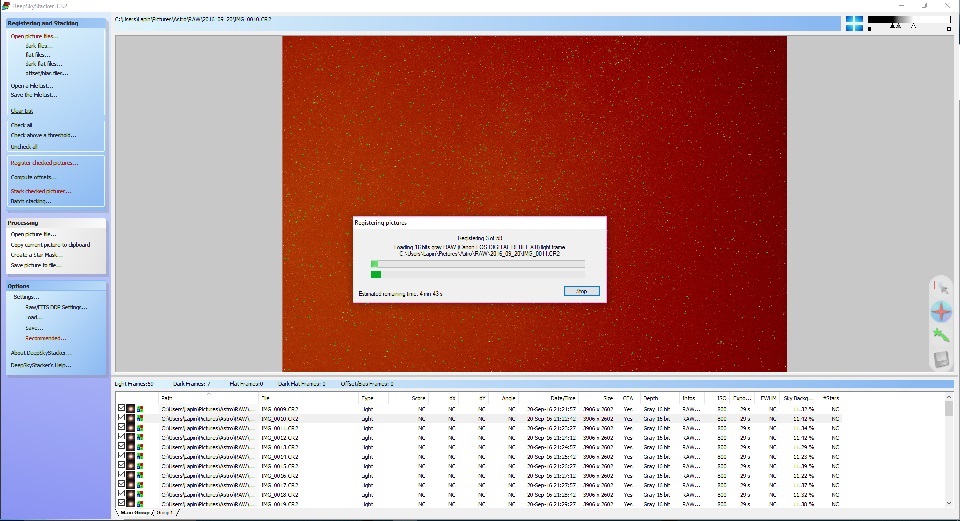
While IRIS offers a complete package, from image acquisition, pre/post-processing, and analysis tools; DeepSkyStacker only performs the registration and stacking.  But it does so in a faster and more efficient way.  DeepSkyStacker can fully utilise RAM and multi-core processing; hence what took 30 minutes in IRIS is now down to 5 minutes in DeepSkyStacker.

It also automates many steps, and you can even save the process and create batches.  So it’s down to load all your files, and then one click to register and stack.
DeepSkyStacker - Processing Files

DeepSkyStacker – Processing Files

I tried the with some wide field of views I had taken back in September.  And the resulting image appeared to be better.  Now I still have to use IRIS as I like how it can remove the sky background gradient and adjust the colors.  And GIMP is still required for the final adjustments.  So here are the main steps that gave me good results:

  1. Load the light, dark, offsets and flat frames (I had no flats or bias/offsets in my trial run, but that didn’t appear to cause an issue)
  2. Ensure that all pictures are checked and select to Register the checked pictures
  3. For the stacking, I found that selecting RGB Channels Background Calibration provided good color, and used the Kappa-Sigma clipping to remove noise.
  4. After stacking DSS will create an Autosave.tif (32-bit TIFF file).  I need to convert this into another format, but without loose the dynamic range.  My current solution is to use Microsoft Photo Gallery to open and save another copy as JPEG.  Finally did a quick stretching of the RGB levels to ensure better dynamic range when saving to 16-bit TIFF.  16-bit TIFF appears to be the only one that will open correctly in IRIS.
  5. Once in the image loaded in IRIS to remove the background sky gradient.  And then save it in BMP format for import into GIMP.  Yes I know I another file format, so far it’s what I find works best.  GIMP converts FITS and TIFF to 8-bit, causing incorrect color depth.
  6. Final adjustments with levels, light curves, saturation, noise filtering, etc.. is done in GIMP.

Now for a little more playing around, and trying it on some on my older pictures.

UPDATE:
DeepSkyStacker saves files in 32-bit TIFF by default.  After stacking many images the dynamic range is quite large, and this is not data we want to loose.  But the problem was finding a program that was able to correctly handle the 32-bit file format.  The next release of GIMP (version 2.10) will handle 32-bit files, but GIMP 2.8 was limited to 16-bit and even there it would convert the image to 8-bit for manipulation (GIMP 2.9.2 and up might work, but needs to be compiles on your computer – development package).  Not good…  Before downloading yet another photo imaging software I tried some of my current programs and found that the  Microsoft Photo Gallery software for Windows 10 does a great job of handling the 32-bit TIFF files.  Once the image opened, under File – Make a Copy I save a version in JPEG.  Yes I know not ideal, but I avoid a lot of the quantization conversion error and I’m able to continue my processing in IRIS and GIMP.

 

November 13, Nearly Full Moon

Image

Making diner and notice that it’s getting dark outside and there’s not a cloud in the sky.  Wait! What time does the Moon rise? 4:54pm it should already be 5 degrees in the sky.  Run to the front of the house and look out the door, but no Moon.  Hmmm… maybe I’m too low and the houses across the street are blocking the view.  Head up one floor and look out the bedroom window!  Ah there it is.  OK kids, who wants to go see the SuperMoon!  I grab my camera as my kids run for their boots and jacket.  I figure that from the street corner I should have a good line of sight.  Once there I ask my son to hold his arms up in the air as if grabbing the moon.  I need to get down pretty low on my knees to get everything lined up.  After a few repeated instructions to open or close his hands, to which he responds with a “Are you done yet!”  I take a few long exposures under the street lamps. No tripod so 1/8sec and ISO 800 it is.  Then took a few more of just the Moon with shorter exposures to avoid causing the Moon to become saturated (1/200sec ISO200)

A bit of photo editing and the end result.

November 13th 2016 Full Moon - just ahead of the Super Moon.

November 13th 2016 Full Moon – just ahead of the Super Moon.

Novembre 14th SuperMoon

Status

Benoit Guertin's avatar

Lots of talk in the last week about the upcoming SuperMoon on November 14th.  While it will be the closest and largest Full Moon since 1948, the differences won’t be that significant.  It’ll look just like any other Full Moon, one that happens every month.  Nothing special will happen to the solar system or the Earth.

However it’s a good opportunity to experiment with your camera and composition as the Moon is rising over the Horizon.  Play around with different settings and different lens.  You can even spend the day before scouting a good spot with view to the East.

Don’t need dark skies.  Don’t need a special mount or stand. This is astro-photography accessible to all.

How Many Stars?

Image

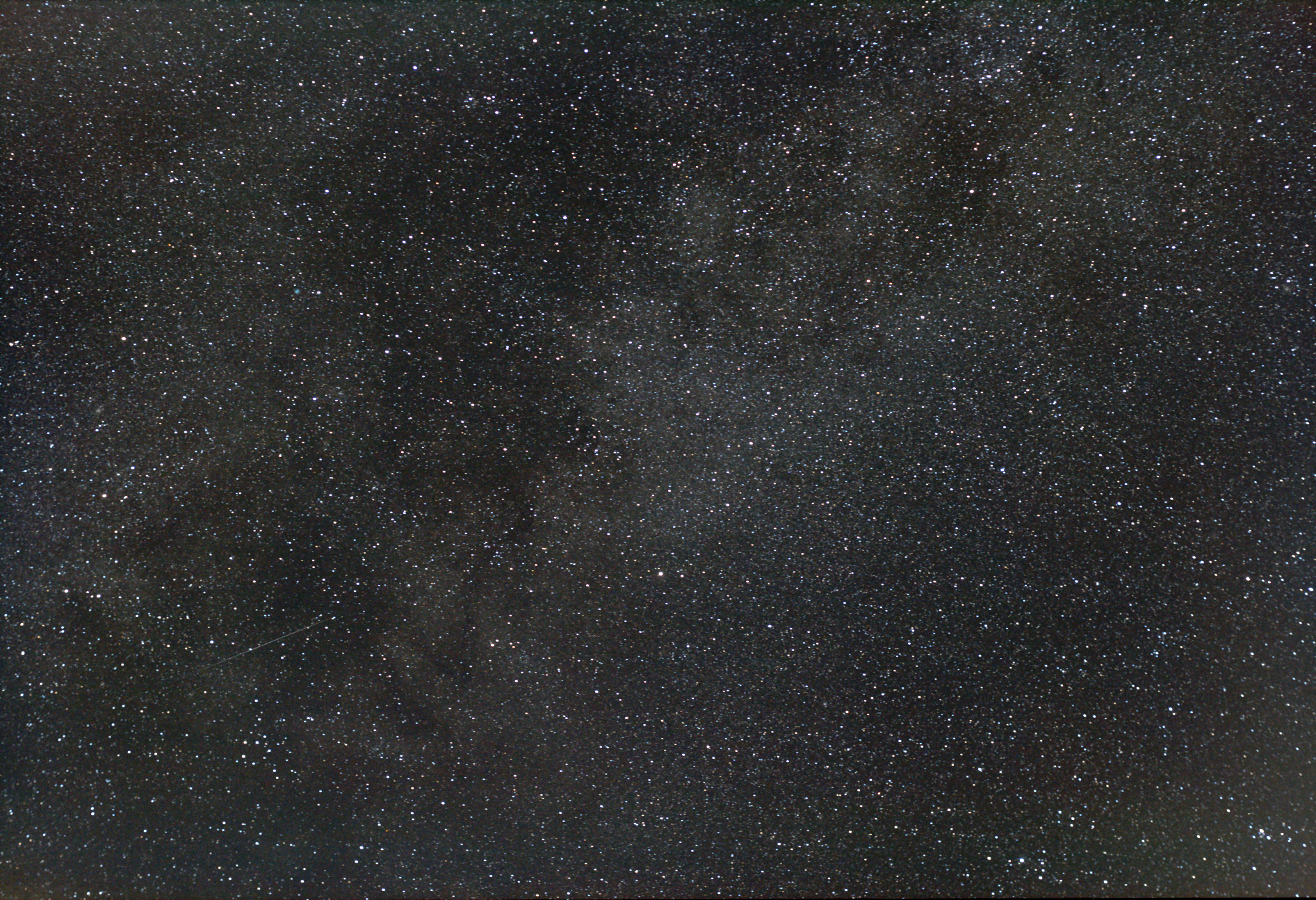
Looking at the sky at night from your backyard you’ll probably be able to see about 50 stars, more if you are away from the city.  So how many do you think is in the frame below?

Portion of the Milky Way near Vulpecula.

Portion of the Milky Way near Vulpecula.

Taking a 200 x 200 pixel sample in the middle I counted 155 stars.  Hence extrapolated to the entire picture comes to 38,000 stars for this 18 x 10 degree portion of the sky.  OK I cheated in taking a picture of a portion of the Milky Way… Nevertheless that is a rather small fraction of the 300 billion stars estimated within our own Milky Way.

Bonus if you can spot the meteor!  Showed up in a single 30sec frame, which I added separately in post processing, else it would have been eliminated from the final image as it’s a random event and I always use a sigma distribution for my stacking.   Hint: it’s located just above open cluster CR399, also known as Brocchi’s Cluster.

Stitching Together the Milky Way

Image

To get a nice view of the Milky Way I would need to get far away from the city lights and a short focal, wide-angle lens.   Also most new DSLR are quite impressive in low light conditions to suppress noise at ISO settings above 1600.  My old Canon XTi (450D) is best kept at 400… but when stacking many frames I can go up to 800 as the noise gets reduced in the process.  Hence when planning of astro-photo session, you need to balance the level of noise and the number of frames you’ll stack.  Also ensure that the light pollution or background brightness level never exceeds 3/4 of your intensity level else you are clipping and loosing information.

The image below is two processed images taken with a 50mm lens on two different days (30 seconds exposure at ISO 800) stitched together the old fashion way: manually in a photo editor.

Milky Way around constellation Vulpecula

Milky Way around constellation Vulpecula – Benoit Guertin

Click on the above image for a a larger version and try to find the planetary nebula Messier 27.  Hint: it’s blue.

Missed the 2016 October Hunter Moon? No Worries

Aside

Missed the photo opportunity with the October Hunter Moon?  No worries, while some are claiming it to be a Supermoon, they are mistaken.  November’s full moon will be just 3hrs after perigee (closest to Earth), while the difference was 20hrs for October.  So the November full moon will be larger than the Hunter Moon that just gone by.

So mark November 14th at 13:52 UTC on your calendar!  For North-America, morning of November 14th prior to sunrise will be your best bet.  In Asia it will be in the evening.  Unfortunately for Europe it’ll take place in the afternoon.