Made a quick tutorial on how to remove background gradient with GIMP
You need the GIMP Astronomy Plugin
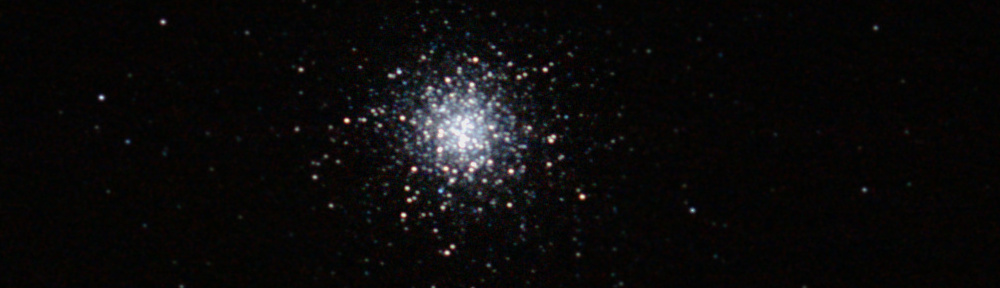
Made a quick tutorial on how to remove background gradient with GIMP
You need the GIMP Astronomy Plugin
If you’re a fan of shooting stars, and want to catch bits of Comet Thatcher burn up in the atmosphere, you won’t want to miss the Lyrid meteor shower this April. The Lyrids are one of the oldest known meteor showers, dating back to ancient China and they can produce up to 20 meteors per hour at their peak. The meteor shower is caused by leftover debris from Comet Thatcher, a long period comet (415 year) that has only been observed once since discovery in 1861, and is scheduled to return no earlier than 2283.
But how can you enjoy this celestial spectacle if you live in the city, where light pollution can wash out the night sky? Here are some tips to help you catch a glimpse of the Lyrids this year.

Enjoy the show! The Lyrids are known for producing bright and fast meteors, some of which can leave persistent trails in the sky. You might also see some fireballs, which are very bright meteors that can light up the whole sky.
The Lyrid meteor shower is a wonderful opportunity to connect with nature and marvel at the beauty of the cosmos. Don’t let the city lights stop you from experiencing this amazing event. Happy stargazing!
I’m sharing with you a photo I took of the recent Venus and Pleiades conjunction. The closest approach was on April 10th, but I had to wait until the 12th for a clear sky. It was a pretty sight to see the bright planet and the star cluster so close together in the night sky. I used my Canon 80D and a telephoto lens to capture this image. Here are some tips on how I did it:

I was hoping to capture a hint of the nebulosity within the star cluster, but I guess 5 seconds exposures, even when integrated to 6 minutes is not enough to capture that fainter detail. It was around 8:00pm when I took the photos, the sky was not fully dark, making the use of exposure above 5 seconds too bright. However I did manage to capture the colors of the stars down to magnitude 9.
I hope you enjoyed this post and learned something new. If you have any questions or comments, feel free to leave them below. Thanks for reading!
Canon 80D
135mm F4.5 telephoto lens
Individual photos: 5 seconds at ISO 1600
6 minutes total integration time
Vixen GP Equatorial Mount (untracked)
Registration and stacking with DSS
GIMP for final adjustment
If you are a stargazer, you might want to mark your calendar for April 11, 2023. At dusk, look west, you will have a chance to see Venus shining bright just 5 degrees left of the Pleiades, a beautiful star cluster also known as the Seven Sisters. Venus is the brightest planet in the sky and it will be easy to spot with the naked eye or binoculars. If you have a clear sight of the horizon and head out early enough, planet Mercury will be visible low in the sky and at a prime time for viewing at 19 degrees from the sun.

The Pleiades, also known as the Seven Sisters, is a famous star cluster in the constellation of Taurus. It is one of the brightest and most easily recognizable clusters in the night sky, visible to the naked eye in both hemispheres. The Pleiades consists of about 1000 stars, but only a few are visible to the unaided eye. The brightest stars are named after the mythological daughters of Atlas and Pleione in Greek mythology: Alcyone, Asterope, Celaeno, Electra, Maia, Merope and Taygeta.

But that’s not all. Venus is also approaching its greatest elongation, which means it is farthest from the sun on the sky’s dome. This will happen on June 4, 2023, when Venus will be 46 degrees east of the sun and will set about three hours after sunset. At that time, Venus will be 49% illuminated and will appear as a first quarter phase through a telescope.
Greatest elongations are important events for observing the inner planets such as Mercury and Venus. They orbit closer to the sun than Earth. Therefore, it always appears near the sun when the sky is still blue and bright or lower over the horizon, and never overhead at midnight.
If you want to learn more about Mercury or Venus and its position in the sky, you can check out some online resources such as EarthSky.org or SkyandTelescope.org. They have detailed information and charts about Venus’s movements and appearances in the sky. You can also use a free online planetarium program such as Stellarium (what I used for the above screen captures) to see how Venus looks from your location at any time.
Mark Bailey
Electronics plus software tips and tricks
Astronomy, and Computer Technology
A site dedicated to learning Astronomy One Step at a Time
Charles Bracken
one post at a time
Astronomy, space and space travel for the non scientist
My adventures with amateur astronomy
Discoveries, Journeys & Milestones in Space Exploration
Welcome to a journey into our Universe with Dr Dave, amateur astronomer and astrophotographer for over 40 years. Astro-imaging, image processing, space science, solar astronomy and public outreach are some of the stops in this journey!
Observations, mostly astronomical from Limavady, UK (55N, 6.9W).
Photography Blog of James Silvester
Astronomy and Amateur Radio
The latest news on WordPress.com and the WordPress community.
 Ben Backyard Astronomy
