Taurid Meteor Shower Already Producing Some Fireballs

Video

While the Taurid Meteor Shower is expected to peak on November 11th and 12th for the Northern Hemisphere, some fireballs have already been observed and recorded.

The following video was recorded in Bangkok Thailand just before 9pm local time November 2nd

And a few days prior to that the following was captured in Poland on October 31st.

These fireballs as they streak across the sky often produce color due their chemical composition and the heat generating entering the atmosphere.  Some may even leave behind a smoke trail that will persist for some time.

The Taurid Meteor Shower are remnants of a large comet that probably got broken up by repeated close encounters with Earth and other planets 20,000 to 30,000 years ago.

Cassini’s 48km Close Approach to Saturn’s Moon Enceladus

Video

Today the Cassini spacecraft made a close approach and dive through the plume of icy spray from Enceladus, Saturn’s sixth largest moon.  What surprised me was the low altitude flyby: just 48km from the moon’s surface.

OK, by aircraft standard a 48km altitude is still way up there as commercial aircraft operate at an altitude of 10km, and even the famed U2 and SR-71 spy planes designed to fly above surface or air launched missiles top out at 20 and 25km altitude respectively.  But for a multi-billion dollar spacecraft this is quite low due to the high risk.  Low Lunar Orbit used during the Apollo missions were at a 100km altitude, and all the hype on New Horizons Pluto flyby, it was at a distant 12,500km pass.  OK ESA’s Rosetta spacecraft was maneuvered down to 29km around comet 69P, but has since moved out to a safer 300km orbit.

Looking forward to seeing what comes out of Cassini’s E-21 flyby.

Source: JPL’s Cassini E-21 Flyby Page

Observing Pluto – What Does it Take?

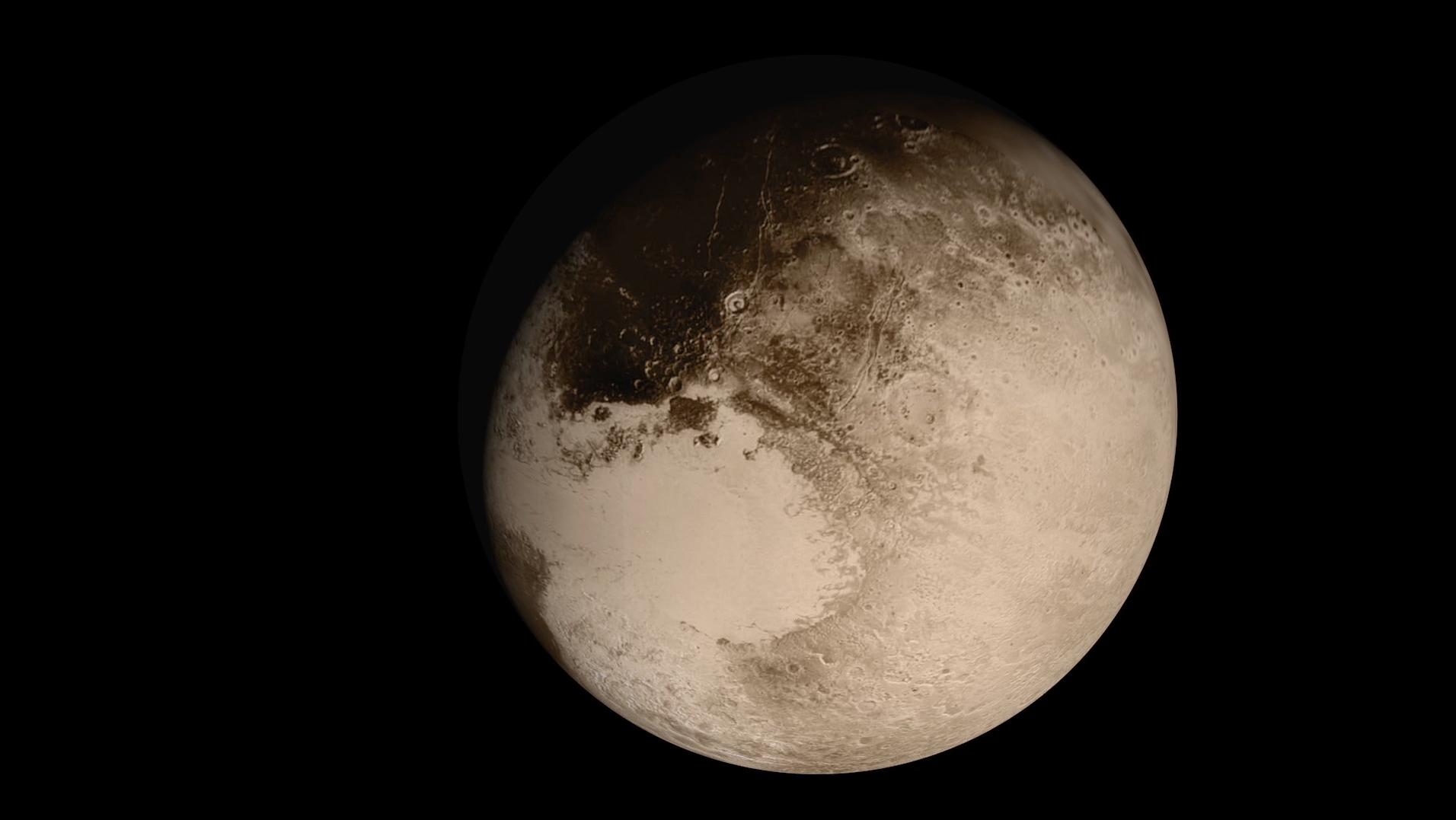
With New Horizons‘ flyby of Pluto and all the great images the spacecraft has been returning I’ve wondered: Is it possible to observe Pluto from one’s backyard?  Personally I’ve never bothered trying for Neptune and beyond as I knew my small 80mm aperture telescope would not be up to the task.  Nevertheless I looked up Pluto’s apparent magnitude and found that it varies between 13.6 and 16.3 due to its elliptic orbit around the Sun.  It’s last closest approach (perihelion) was September 1989, and unfortunately Pluto is currently distancing itself for its 248 year journey around the Sun therefore slowly dimming, sitting right now at apparent magnitude 14.

Pluto as viewed by New Horizons during flyby (14 July 2015) - NASA

Pluto as viewed by New Horizons during flyby (14 July 2015) – NASA

What size of telescope does it take to observe an apparent magnitude 14 object?  Based on the theoretical limits it should be possible to make visual observation with a 10in aperture telescope, but most would say you need a 12in if you plan to observe with an ocular.  Of course, equipped long exposure cameras you can have a smaller telescope, but a high focal length would be preferred to reduce to better pick it out from the background of stars.  And I’ve managed to pick up mag 14 stars in my photos with the Skywatcher 80ED with 60sec exposures.  Therefore Pluto should be accessible to backyard astronomy.  Note that at Pluto’s size and distance it shows up as a light point and not a sphere like the other planets.

Up to the challenge?  Middle of November will be a great opportunity to locate Pluto as it will swing within 1deg of Ksi 2 Sagittarius, a magnitude 3.5 star.  In the June edition, Sky & Telescope created a great star-chart to locate Pluto until December 2015.  Good Luck!

Click on image for Sky & Telescope Pluto 2015 Sky Chart

Click on image for Sky & Telescope Pluto 2015 Sky Chart

Reference: Sky & Telescope

Jupiter in 4k Ultra HD

Video

NASA has just released a video rendered in 4K Ultra HD of Jupiter from images captured by the Hubble Space Telescope.

Learn more about this video: http://www.nasa.gov/press-release/goddard/hubble-s-planetary-portrait-captures-new-changes-in-jupiter-s-great-red-spot


Hubble Space Telescope – 25 Years of Exploring the Universe

Hubblesite.org

Hubblesite.org

Exactly 25 years ago today, the Discovery space shuttle took off with the Hubble Space Telescope aboard.  For all the mind-blowing images Hubble has been able to bring to us, the project started actually pretty badly…

Above all the funding challenges that such a large project faced, there were many issues on how and who should grind the primary mirror.  In all three mirrors were built by three different companies should there be issues during production.  The Challenger disaster in 1986 delayed the launch of the telescope, and when it was finally placed in orbit, a faulty mirror wasn’t able to correctly focus the image to the clear and crisp views everyone had expected.  As the flaw was due to an error in the calibrating instrument during the final shaping of the mirror, it meant it was flawed to perfection, and could therefore be corrected by giving it “glasses”.  It wasn’t until 1993 that corrective optics were incorporated and we could finally start exploring the potential of the telescope.

As the Hubble Space Telescope is in low earth orbit it is within easy reach to be serviced by astronauts, and five shuttle missions were dedicated to servicing Hubble, the last one being in 2009 to extend the operation until 2020.  By then the James Webb Space Telescope (JWST) should be operational.  Something to note here is that while Hubble could be serviced and maintained over time due to its proximity to Earth, JWST will be too far out, located at the L2 Lagrange point – 1.5 million km, beyond Moon’s orbit.

To celebrate these 25 years, NASA and ESA have released this wonderful galactic firework: Westerlund 2

NASA Unveils Celestial Fireworks as Official Hubble 25th Anniversary Image
Source: Hubblesite.org

Skywatcher StarGate 18 Truss Dobson

With the new Sky-Watcher StarGate 18, large scopes for all!

Dobsons are great “bang for the buck” with their quick setup, simple optics and ease of use.  An 8″ Dobson should be everyone’s first telescope; not too big, not to expensive, but with great capability and endlessly upgradeable.  Didn’t listen to that bit of wisdom… and now realize my mistake.  But one of the drawbacks with Newtonians is that as you seek to dive deeper into space by increasing the telescope size, you quickly reach a point where the optical tube becomes too big to transport.  One way to get around this issue is to have a “collapsible” optical tube by using a truss design.

When Meade launched the LightBridge series back in 2008 it brought this great concept to everyone’s doorstep.  But the largest offered was a 16″ and weighted in a 130 lbs assembled.  Going bigger was out of the question.  But now Sky-Watcher has addressed the weight issue with a great design and a good choice of materials.  The StarGate 18 weighs in at 110 lbs and looks great!

Sky-Watcher StarGate 18

Sky-Watcher StarGate 18

The optics are standard F4 Newtonian design: 458mm diameter and 1900mm focal length.  The primary mirror is not solid, but designed with ribs to allow for a thinner (and lighter) design, while maintaining rigidity. Even the secondary mirror has cells carved out to reduce weight.  The tubes use quick-assembly clamps and Sky-Watcher claims a setup time under 30 minutes.

The rocker-designed base with counter weight is a very nice touch, everything sliding on Teflon bearings.

OK the $7,300CAD price means it’s not for everyone, but when one considers that a similar sized Ritchey-Chretien astrograph will be over 5x the price, and you still have to find a suitable EQ mount for it, it’s a bargain.

Source: Sky-Watcher

It’s GO for the Thirty Meter Telescope (TMT)

We all have aperture fever, not just us crazy backyard astronomers, and with the latest announcement from the Canadian Government to provide nearly $250 million over 10 years, we should see the TMT operational in 2023-2024.  When completed it will be the largest telescope, until the Europeans have their European Extremely Large Telescope (E-ELT), also set for first light in 2024.

Thirty Meter Telescope - Courtesy TMT International Observatory

Thirty Meter Telescope – Courtesy TMT International Observatory

The telescope optical design is a folded Ritchey-Chrétien. Both the primary and secondary mirrors are hyperboloidal, and together they form a well-corrected focus. The tertiary mirror is used to fold and steer the light path so that the science beam can be delivered to any of eight instruments that will be mounted on the two main Nasmyth platfoms. The image is formed 20 meters from the center of the tertiary mirror. The focal ratio of the telescope is f/15.

The field of view of the telescope is 15 arc minutes (fully illuminated), or 20 arc minutes with slight vignetting at the edges of the field. At f/15, the focal length of TMT is 450 meters (1476 feet)! This means that the 20 arc minute field of view measures 2.618 meters (8.6 feet) in diameter.

The primary mirror focal ratio is f/1. This short focal ratio was chosen to make the telescope compact, which helps to keep the telescope structure and the enclosure affordable. As the name implies, the primary mirror is 30 meters (98 feet) in diameter, and because it is f/1 it has a focal length of 30 meters.

Current king of the largest light-bucket is the 10.4m diameter Gran Telescopio Canarias.  Therefore the 30m TMT and the 39m E-ELT will be a considerable gain in light gathering power over the current crop of telescopes.  Some are predicting that scientists will be able to directly observe planets orbiting distance stars, and perhaps even see distant oceans and weather formations.

It’s always intrigued me how we spend so much on EQ mounts, when these large telescopes operate in a simpler Alt-Az configuration.

Sources: CBC, TMT