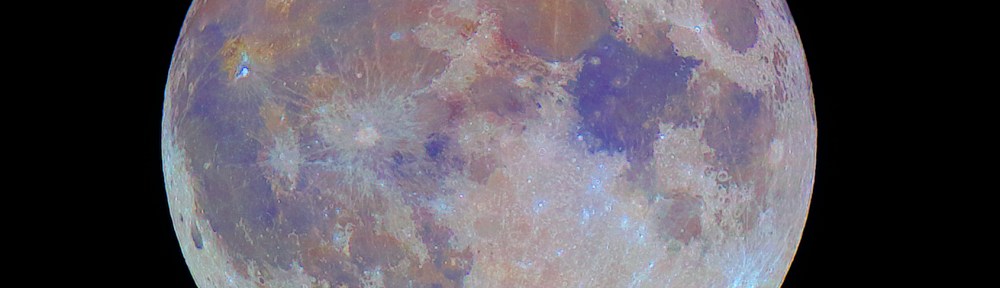
Back in 2017 I color enhanced one of my photos of the moon to see if I could pick up the subtle hues due to the different minerals as I had seen some posts in forums. I decided to redo this experiment, but this time with a photo of the Super Blue Moon from August last year. I figured starting off with a brighter and sharper photo will yield better results.
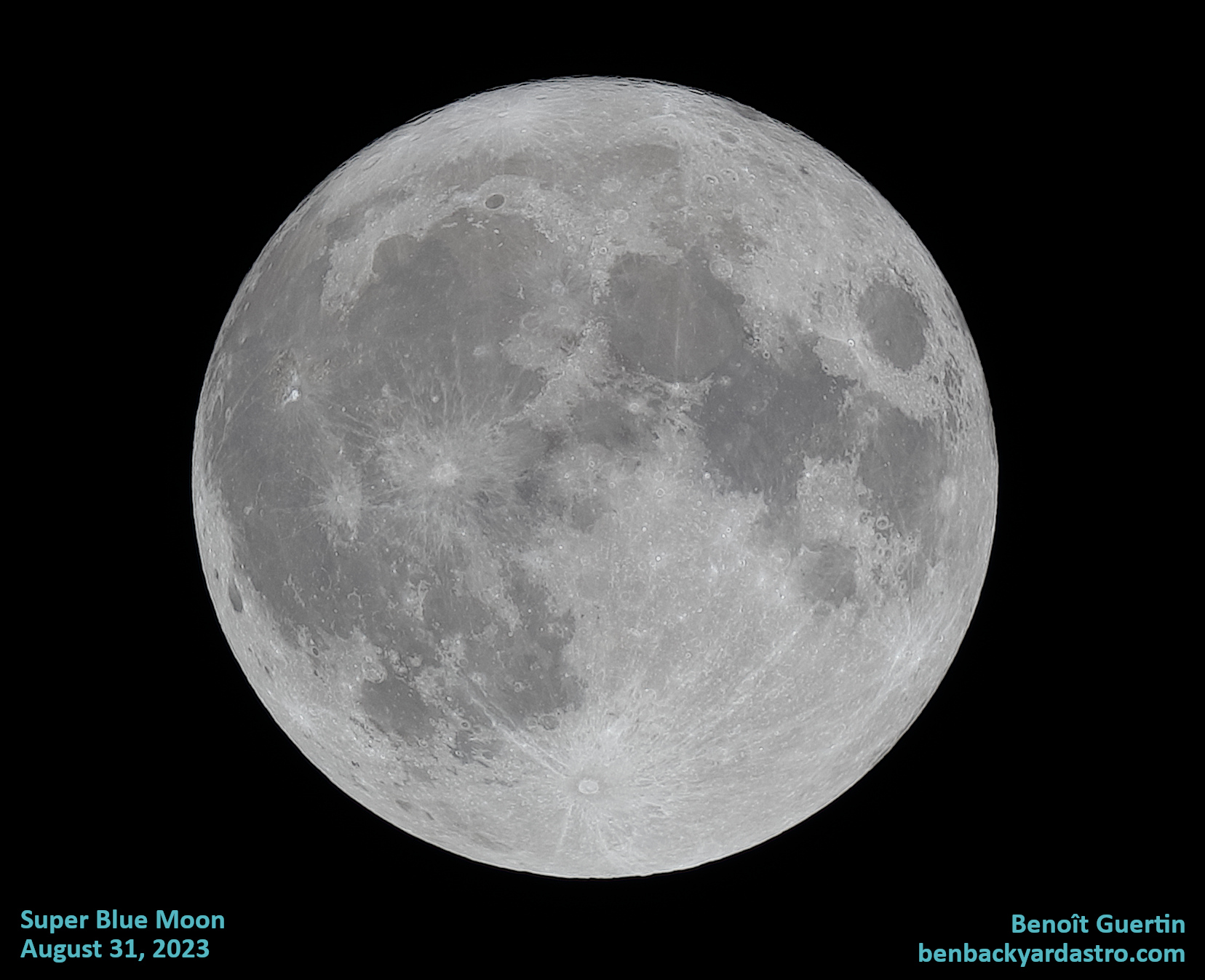
Using a photo editor I duplicated the layer and boosted the color saturation. Then I blended both layers together to get a nice result. The reason why I don’t simply boost the saturation in the original image is that doing so also increases the “noise” in the image. Keeping a grayscale and a color layer separate preserves the details while enhancing colors.

The result is often referred to as the Mineral Moon because the difference in orange and blue hues are due to the different concentration of minerals in the regolith. Blueish areas are high in titanium, possibly as high as 10%, compared to on Earth where titanium is approximately 1% of the soil content. The orange, brown areas have higher iron content.
The newer and brighter impact craters are even more contrasting over the dark areas formed by old lava flow during the early formation of the Moon.
Who knew that with nothing more than a DSLR and small telescope from a backyard you can map the geology, age and minerals on the Moon. If you have a good photo of the Moon on your computer, give it a try!
 Ben Backyard Astronomy
Very interesting! I know my way around an image editor, but I didn’t know you could use them to spot minerals on the moon. Does it work for other planets, or are they to far away?
LikeLiked by 1 person
You are right in that the other planets are too far away for backyard telescopes to pick up the subtle differences in the minerals. And even then, only Mars would be a good candidate as the others are covered in a thick atmosphere like Venus or a giant ball of gas like the outer planets.
LikeLiked by 1 person